

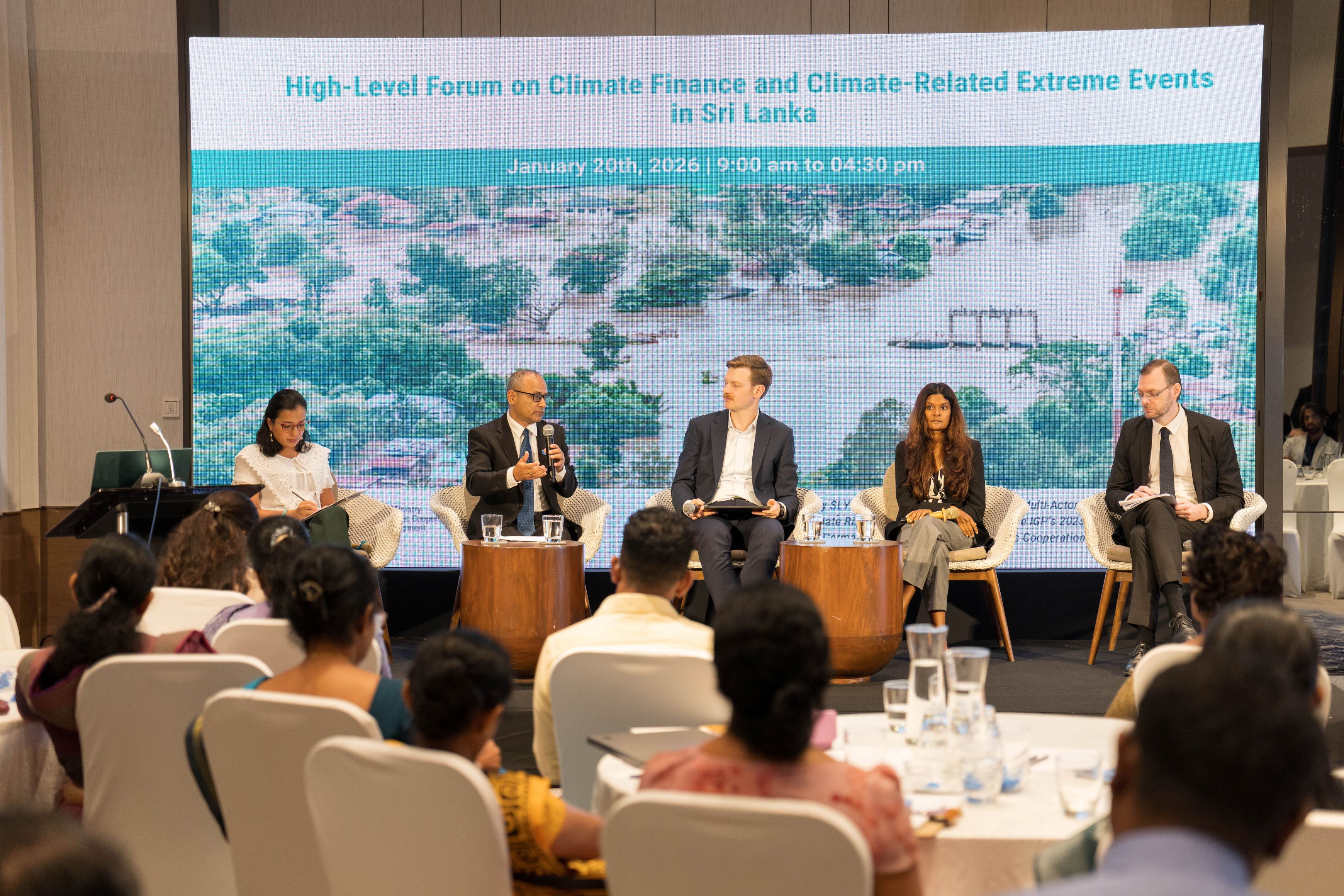
Sri Lanka was hit by Cyclonic Storm Ditwah in late November 2025, the country’s deadliest weather-related disaster since the 2004 Indian Ocean tsunami. Made more likely and intense due to climate change, the cyclonic storm had devastating impacts on Sri Lanka, with over 2 million people affected, almost 650 fatalities, around 200 still missing, and billions of USD in losses and damages to infrastructure, property, agricultural land, and livelihoods.
These impacts highlight the urgent need for Sri Lanka as a climate-vulnerable developing country to strengthen climate disaster risk financing systems and access funding for relief, recovery, reconstruction, and long-term resilience-building. Climate-induced extreme events like Cyclonic Storm Ditwah underscore the disproportionate burden faced by vulnerable nations that have contributed minimally to global greenhouse gas emissions yet bear the brunt of climate impacts.
Situated at the intersection of adaptation, mitigation, and development, addressing loss and damage requires an enhanced understanding of institutional readiness, available funding mechanisms, and strategic pathways for accessing tools and support, in order to complement and strengthen existing disaster response plans and frameworks. This includes building knowledge of key mechanisms and instruments such as the Fund for Responding to Loss and Damage (FRLD), the Santiago Network for Loss and Damage (SNLD), as well as relevant multilateral and bilateral processes and frameworks, alongside strengthened coordination across government institutions and non-state actors to enable access to technical expertise for effective access and deployment of risk financing instruments to strengthen climate resilience.
This forum organized by SLYCAN Trust facilitates discussion and action on climate finance for responding to climate-related extreme events, and aims to:
