
Climate change is placing increasing pressure on Sri Lanka’s agricultural systems. Changing rainfall patterns, rising temperatures, droughts, and other extreme weather events are affecting agricultural production and the livelihoods of farming communities.1 Addressing these challenges requires more than identifying risks. It calls for practical solutions that bring together scientific research, appropriate technologies, community knowledge, and institutional collaboration.
These issues shaped a recent Climate 2.0 dialogue organised by ClimaComms with academics and researchers from the Faculty of Agriculture, Rajarata University of Sri Lanka. Climate 2.0 is an informal dialogue series under SLYCAN Trust’s ClimaComms initiative, bringing together individuals from diverse fields to exchange knowledge, explore climate-related challenges, and identify opportunities for collaboration. The initiative also seeks to strengthen climate literacy and promote evidence-based climate action.
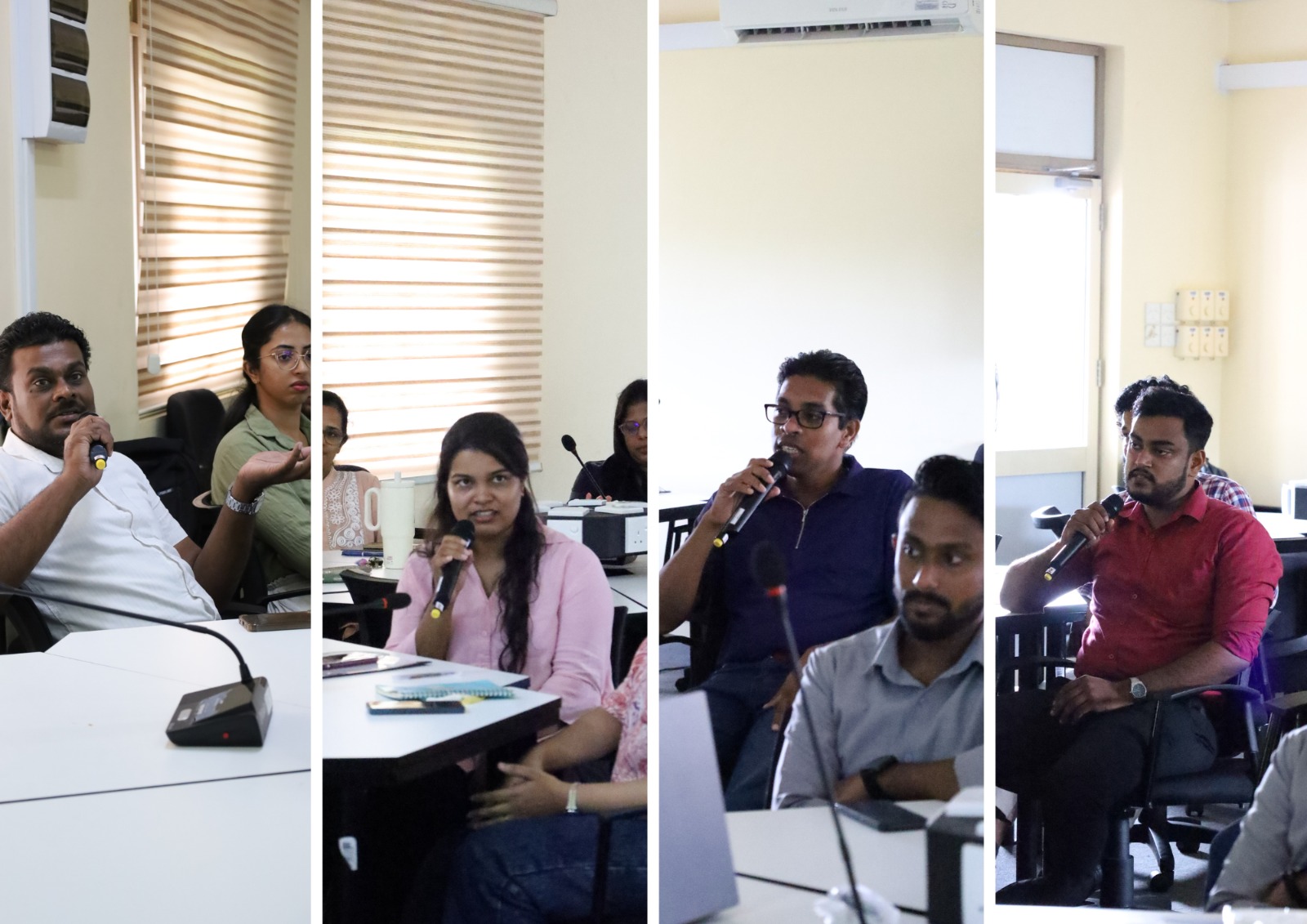
The dialogue at Rajarata University focussed on climate resilience in agriculture, with discussions covering climate-resilient crops, weather information, community-based adaptation, student engagement, capacity development, and pathways for translating research into practice.
Developing agricultural systems that can withstand changing climatic conditions is essential for Sri Lanka, particularly in the country’s Dry Zone, where agricultural production is closely linked to seasonal rainfall and the availability of water. Research into climate-resilient crop varieties and improved agricultural practices can help farmers manage these risks and sustain production under changing environmental conditions.
Rice, a staple crop in Sri Lanka, is particularly important in this context. Research on climate-smart rice varieties and adaptive cultivation practices can help identify approaches suited to changing rainfall and temperature conditions. Further research into heat-tolerant crops is also important, as high temperatures can affect plant growth, flowering, pollination, grain development, and ultimately crop yields.
The discussions highlighted the potential of traditional and underutilised crops, including finger millet, and the importance of understanding genetic diversity when developing resilient agricultural systems. Research into locally adapted crop varieties, combined with improved cultivation practices and access to quality planting materials, could support agricultural diversification.
However, identifying promising crops is only the first step. Their wider adoption depends on understanding how they perform under local conditions, whether farmers can access suitable planting materials, and how cultivation practices can be adapted to their needs. Stronger collaboration among researchers, agricultural extension services, and farming communities will be essential for translating research findings into practical benefits.
Timely and reliable weather information can help farmers make better-informed decisions about planting, irrigation, and harvesting. However, access to locally relevant forecasts and the ability to interpret and apply them remain challenges in some agricultural communities in Sri Lanka.
At Rajarata University, an ongoing initiative involves developing a low-cost, portable automatic weather station using the Internet of Things (IoT) technology. With initial data already being collected, this initiative offers opportunities to strengthen local weather monitoring and support agricultural research. Its potential for affordable deployment and data sharing with relevant institutions could also contribute to wider access to locally generated weather information.
Participants discussed how weather observations could be integrated with satellite data and broader climate information systems to improve agricultural planning and climate risk assessment. Such information becomes particularly valuable when translated into practical guidance that farmers can use in their day-to-day decisions.
Research presented at the Faculty of Agriculture’s 2024 Annual Research Symposium on farmers’ use of scientific weather forecasts in the Palugaswewa tank cascade system offers further insight into this challenge. The research identified barriers including limited awareness, restricted smartphone access, poor internet connectivity, and insufficient access to technology.2
These findings underline the need for targeted training and diverse communication channels rather than relying exclusively on digital platforms. Community networks, agricultural extension officers, and other locally trusted channels can help bridge the gap between scientific information and farmers’ decisions. The key lesson is that collecting climate data is only part of the process. Information must also reach the people who need it, in a form they can understand, trust and apply.
Universities play an important role in preparing young people to contribute to climate resilience and sustainable agricultural development. Research opportunities, practical training, and exposure to professional environments can help students connect academic knowledge with the challenges faced by communities and institutions.
Rajarata University’s initiative to establish the Centre of Excellence in Climate Change Studies provides opportunities to connect learning, research, and practical applications. Stronger institutional partnerships could further enhance these opportunities through joint research, specialised training, knowledge sharing, and professional development.
During the dialogue, participants emphasised the importance of building stronger connections between the university and other institutions to help students gain practical experience and develop skills relevant to emerging climate challenges. They also highlighted the value of involving students in field-based research and community-level initiatives to enable them to better understand local climate vulnerabilities and adaptation priorities.
Such collaboration can help nurture the next generation of agricultural researchers and climate practitioners while ensuring that academic learning remains connected to real-world needs. It can also create opportunities for students to contribute to locally relevant solutions and bring fresh perspectives to ongoing adaptation initiatives.
Climate adaptation depends not only on scientific research and technology but also on local knowledge, traditional resource management, and community-led initiatives. Sri Lanka’s tank cascade system illustrates how interconnected water management practices support agriculture, ecosystems and rural livelihoods in the Dry Zone.
The university’s continuing work on these systems provides opportunities to examine the relationships between water resources, agricultural production, ecosystem management and community practices. Building on this experience can help connect scientific research with locally appropriate approaches to climate adaptation and water management.
Community-based beekeeping offers another example of how university-community collaboration can support rural livelihoods and diversify income sources. During the dialogue, Dr.Chinthaka Karalliyaadda, Senior Lecturer in the Department of Agricultural Systems, shared the experience of a project undertaken by the university with the farming communities in the Palugaswewa area. Following training programmes conducted over consecutive years, participating farmers established their own bee colonies, creating additional income opportunities alongside paddy cultivation. The experience illustrates how practical training and sustained engagement can help communities develop livelihood opportunities that complement existing agricultural activities.
Building on this experience, the university is interested in exploring similar initiatives in collaboration with other organisations, potentially extending the benefits of community-based projects to additional farming communities.
Participants also discussed the value of strengthening connections among universities, community development programmes, private sector organisations, research institutes, international agencies, and agricultural stakeholders. Bringing scientific evidence together with local experience can help ensure that adaptation initiatives respond to community priorities and build on existing capacities.
For SLYCAN Trust Chief Operating Officer Mr.Anura Sathurasinghe, moving from identifying climate challenges to implementing solutions was central to the discussion. He emphasised that climate change impacts are already being experienced and that identifying effective responses is essential to building a more resilient future. However, solutions must move beyond discussion and planning to achieve meaningful, lasting change.
The Dean of the Faculty of Agriculture, Prof. H.M.J.A. Gunarathne, highlighted the university’s engagement with students across different thematic areas and research priorities. He also emphasised the importance of building connections with other institutions to expand access to training, strengthen student capacities, and provide opportunities for professional development.
These priorities provide a basis for further collaboration between Rajarata University, and SLYCAN Trust. The discussion demonstrated the value of connecting existing university research and community initiatives with opportunities for further collaboration. From conducting research on climate-resilient crops and improving access to weather information to strengthening local adaptation and expanding professional training, there are several areas where shared efforts could lead to practical outcomes.
Ultimately, strengthening climate resilience requires locally relevant solutions, sustained partnerships, and a commitment to putting ideas into action. Connecting research with community needs and creating opportunities for the next generation of agricultural researchers and practitioners will be important in building more resilient agricultural systems and supporting Sri Lanka’s long-term food security.
Mayantha Madurasinghe works as the Assistant Manager, Programme and Finance at SLYCAN Trust. He is involved in thematic areas such as food systems, human mobility, loss and damage and youth. Mayantha has represented SLYCAN Trust in various forums, including the Conference of Parties of the UNFCCC in Egypt and UAE, and the Bonn Climate Change Conference 2023. He holds a BSc (hons) in Biotechnology from Nilai University Malaysia, and his extensive experience in the environmental field has led him to publish several research publications at various symposia.

Climate change is placing increasing pressure on Sri Lanka’s agricultural systems. Changing rainfall patterns, rising temperatures, droughts, and other extreme weather events are affecting agricultural production and the livelihoods of farming communities.1 Addressing these challenges requires more than identifying risks. It calls for practical solutions that bring together scientific research, appropriate technologies, community knowledge, and institutional collaboration.
These issues shaped a recent Climate 2.0 dialogue organised by ClimaComms with academics and researchers from the Faculty of Agriculture, Rajarata University of Sri Lanka. Climate 2.0 is an informal dialogue series under SLYCAN Trust’s ClimaComms initiative, bringing together individuals from diverse fields to exchange knowledge, explore climate-related challenges, and identify opportunities for collaboration. The initiative also seeks to strengthen climate literacy and promote evidence-based climate action.
The dialogue at Rajarata University focussed on climate resilience in agriculture, with discussions covering climate-resilient crops, weather information, community-based adaptation, student engagement, capacity development, and pathways for translating research into practice.
Developing agricultural systems that can withstand changing climatic conditions is essential for Sri Lanka, particularly in the country’s Dry Zone, where agricultural production is closely linked to seasonal rainfall and the availability of water. Research into climate-resilient crop varieties and improved agricultural practices can help farmers manage these risks and sustain production under changing environmental conditions.
Rice, a staple crop in Sri Lanka, is particularly important in this context. Research on climate-smart rice varieties and adaptive cultivation practices can help identify approaches suited to changing rainfall and temperature conditions. Further research into heat-tolerant crops is also important, as high temperatures can affect plant growth, flowering, pollination, grain development, and ultimately crop yields.
The discussions highlighted the potential of traditional and underutilised crops, including finger millet, and the importance of understanding genetic diversity when developing resilient agricultural systems. Research into locally adapted crop varieties, combined with improved cultivation practices and access to quality planting materials, could support agricultural diversification.
However, identifying promising crops is only the first step. Their wider adoption depends on understanding how they perform under local conditions, whether farmers can access suitable planting materials, and how cultivation practices can be adapted to their needs. Stronger collaboration among researchers, agricultural extension services, and farming communities will be essential for translating research findings into practical benefits.
Timely and reliable weather information can help farmers make better-informed decisions about planting, irrigation, and harvesting. However, access to locally relevant forecasts and the ability to interpret and apply them remain challenges in some agricultural communities in Sri Lanka.
At Rajarata University, an ongoing initiative involves developing a low-cost, portable automatic weather station using the Internet of Things (IoT) technology. With initial data already being collected, this initiative offers opportunities to strengthen local weather monitoring and support agricultural research. Its potential for affordable deployment and data sharing with relevant institutions could also contribute to wider access to locally generated weather information.
Participants discussed how weather observations could be integrated with satellite data and broader climate information systems to improve agricultural planning and climate risk assessment. Such information becomes particularly valuable when translated into practical guidance that farmers can use in their day-to-day decisions.
Research presented at the Faculty of Agriculture’s 2024 Annual Research Symposium on farmers’ use of scientific weather forecasts in the Palugaswewa tank cascade system offers further insight into this challenge. The research identified barriers including limited awareness, restricted smartphone access, poor internet connectivity, and insufficient access to technology.2
These findings underline the need for targeted training and diverse communication channels rather than relying exclusively on digital platforms. Community networks, agricultural extension officers, and other locally trusted channels can help bridge the gap between scientific information and farmers’ decisions. The key lesson is that collecting climate data is only part of the process. Information must also reach the people who need it, in a form they can understand, trust and apply.
Universities play an important role in preparing young people to contribute to climate resilience and sustainable agricultural development. Research opportunities, practical training, and exposure to professional environments can help students connect academic knowledge with the challenges faced by communities and institutions.
Rajarata University’s initiative to establish the Centre of Excellence in Climate Change Studies provides opportunities to connect learning, research, and practical applications. Stronger institutional partnerships could further enhance these opportunities through joint research, specialised training, knowledge sharing, and professional development.
During the dialogue, participants emphasised the importance of building stronger connections between the university and other institutions to help students gain practical experience and develop skills relevant to emerging climate challenges. They also highlighted the value of involving students in field-based research and community-level initiatives to enable them to better understand local climate vulnerabilities and adaptation priorities.
Such collaboration can help nurture the next generation of agricultural researchers and climate practitioners while ensuring that academic learning remains connected to real-world needs. It can also create opportunities for students to contribute to locally relevant solutions and bring fresh perspectives to ongoing adaptation initiatives.
Climate adaptation depends not only on scientific research and technology but also on local knowledge, traditional resource management, and community-led initiatives. Sri Lanka’s tank cascade system illustrates how interconnected water management practices support agriculture, ecosystems and rural livelihoods in the Dry Zone.
The university’s continuing work on these systems provides opportunities to examine the relationships between water resources, agricultural production, ecosystem management and community practices. Building on this experience can help connect scientific research with locally appropriate approaches to climate adaptation and water management.
Community-based beekeeping offers another example of how university-community collaboration can support rural livelihoods and diversify income sources. During the dialogue, Dr.Chinthaka Karalliyaadda, Senior Lecturer in the Department of Agricultural Systems, shared the experience of a project undertaken by the university with the farming communities in the Palugaswewa area. Following training programmes conducted over consecutive years, participating farmers established their own bee colonies, creating additional income opportunities alongside paddy cultivation. The experience illustrates how practical training and sustained engagement can help communities develop livelihood opportunities that complement existing agricultural activities.
Building on this experience, the university is interested in exploring similar initiatives in collaboration with other organisations, potentially extending the benefits of community-based projects to additional farming communities.
Participants also discussed the value of strengthening connections among universities, community development programmes, private sector organisations, research institutes, international agencies, and agricultural stakeholders. Bringing scientific evidence together with local experience can help ensure that adaptation initiatives respond to community priorities and build on existing capacities.
For SLYCAN Trust Chief Operating Officer Mr.Anura Sathurasinghe, moving from identifying climate challenges to implementing solutions was central to the discussion. He emphasised that climate change impacts are already being experienced and that identifying effective responses is essential to building a more resilient future. However, solutions must move beyond discussion and planning to achieve meaningful, lasting change.
The Dean of the Faculty of Agriculture, Prof. H.M.J.A. Gunarathne, highlighted the university’s engagement with students across different thematic areas and research priorities. He also emphasised the importance of building connections with other institutions to expand access to training, strengthen student capacities, and provide opportunities for professional development.
These priorities provide a basis for further collaboration between Rajarata University, and SLYCAN Trust. The discussion demonstrated the value of connecting existing university research and community initiatives with opportunities for further collaboration. From conducting research on climate-resilient crops and improving access to weather information to strengthening local adaptation and expanding professional training, there are several areas where shared efforts could lead to practical outcomes.
Ultimately, strengthening climate resilience requires locally relevant solutions, sustained partnerships, and a commitment to putting ideas into action. Connecting research with community needs and creating opportunities for the next generation of agricultural researchers and practitioners will be important in building more resilient agricultural systems and supporting Sri Lanka’s long-term food security.
